Last of Rain
Last of Rain
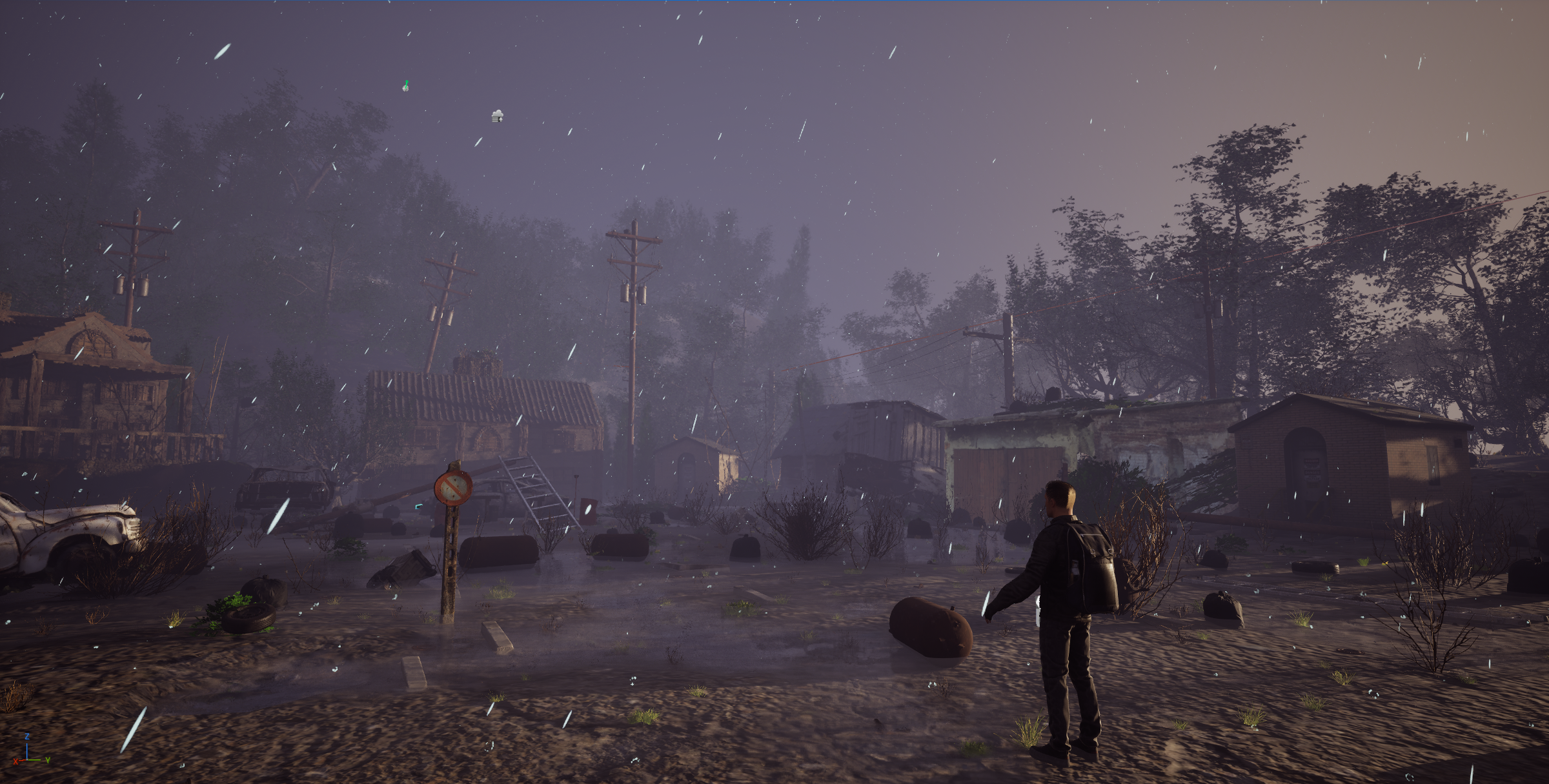
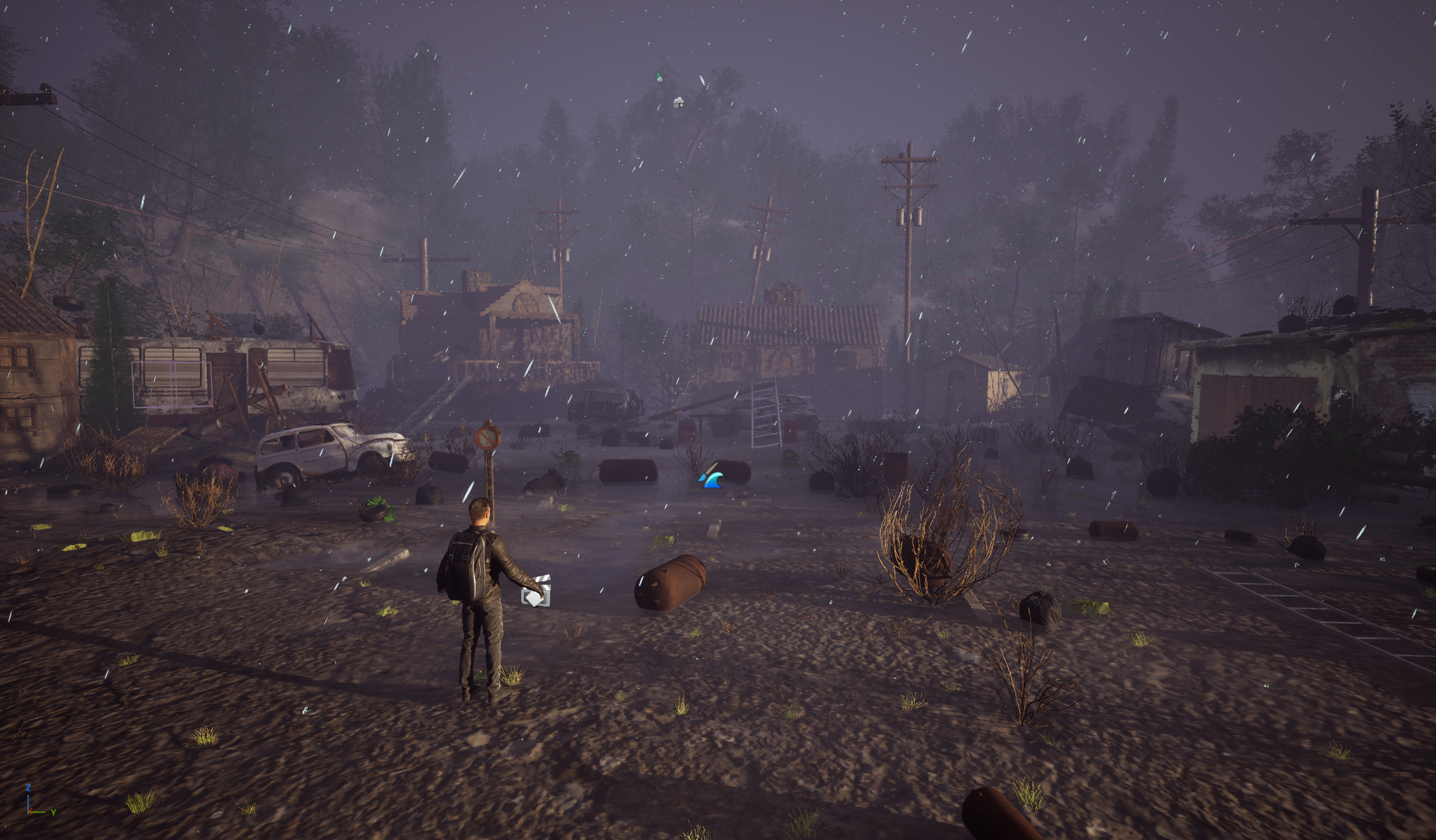
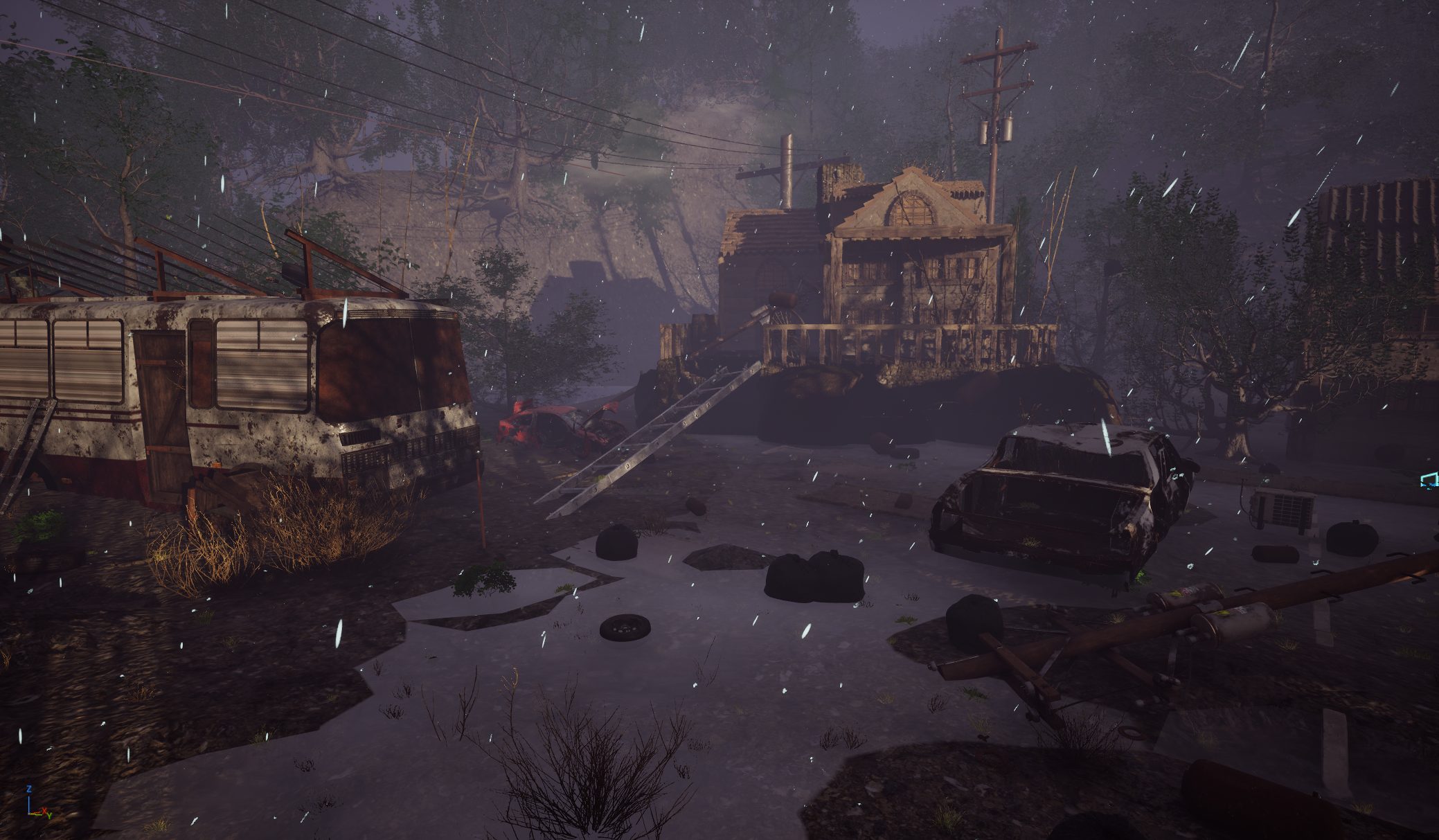
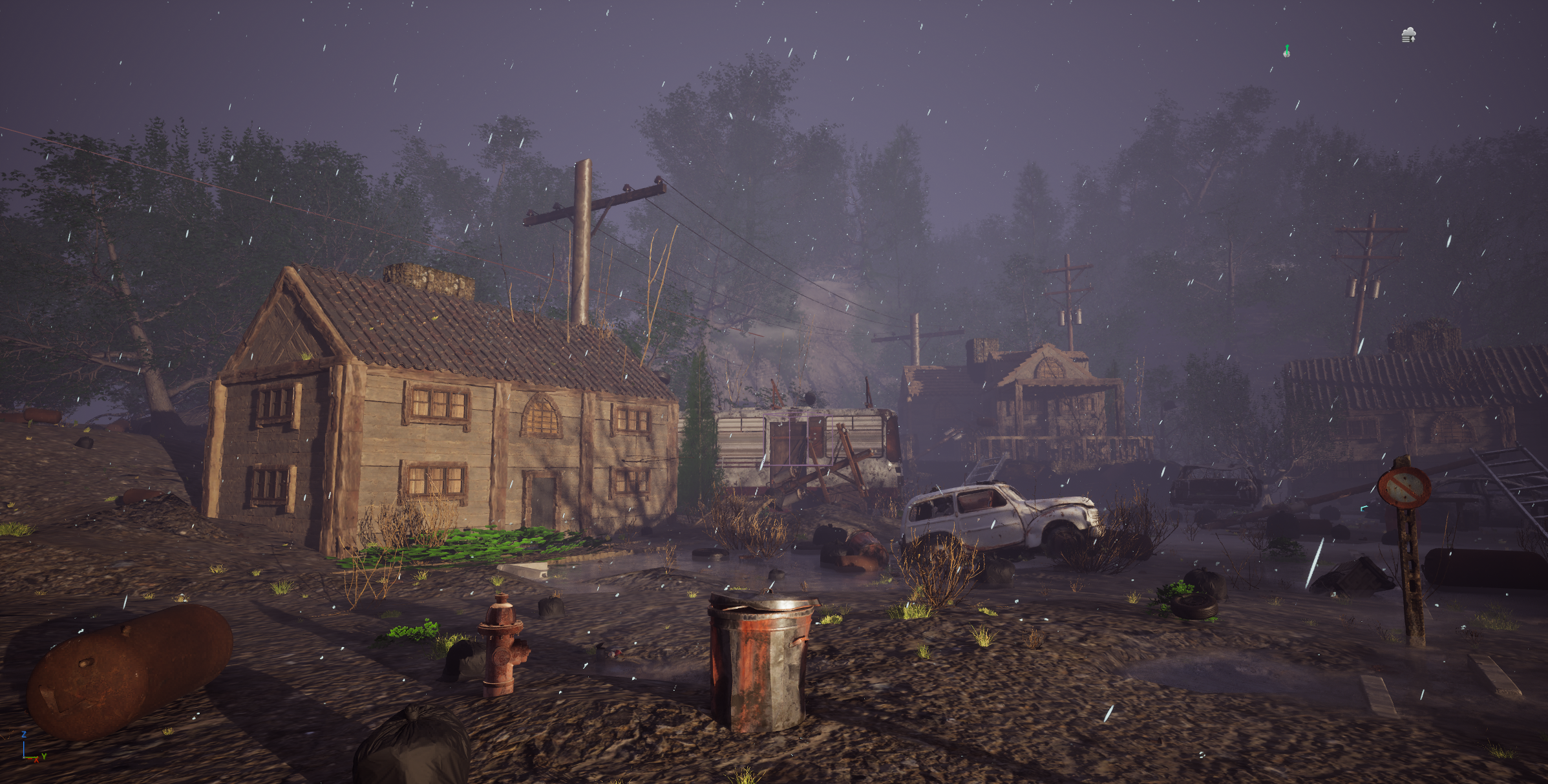
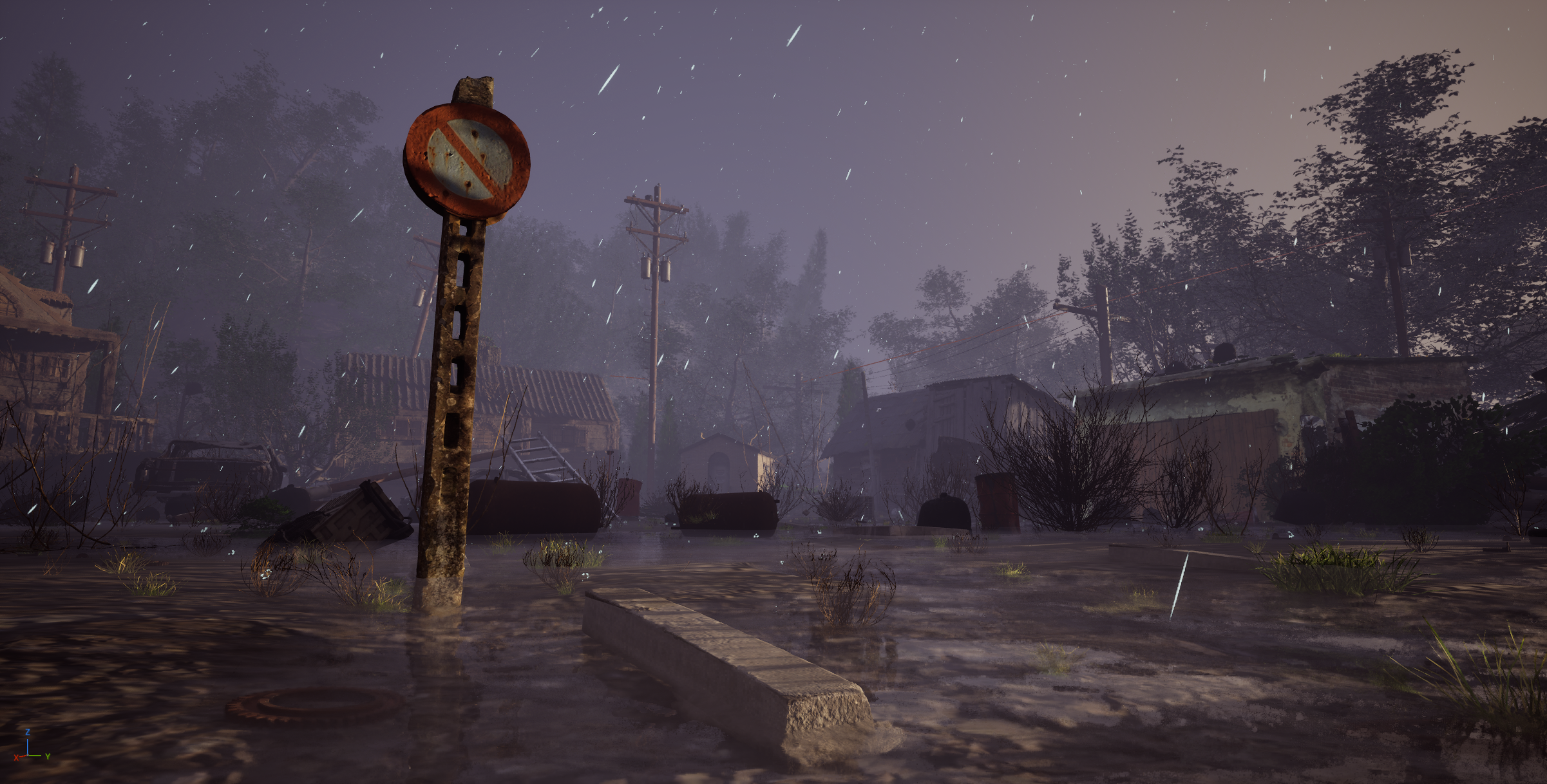
The Last of Rain is a real-time environment focused on cinematic world-building and atmosphere, set in a post-disaster urban landscape following a large-scale storm event. The scene captures a transitional moment at dusk, where environmental destruction, persistent rainfall, and early stages of natural overgrowth begin to reshape the city.
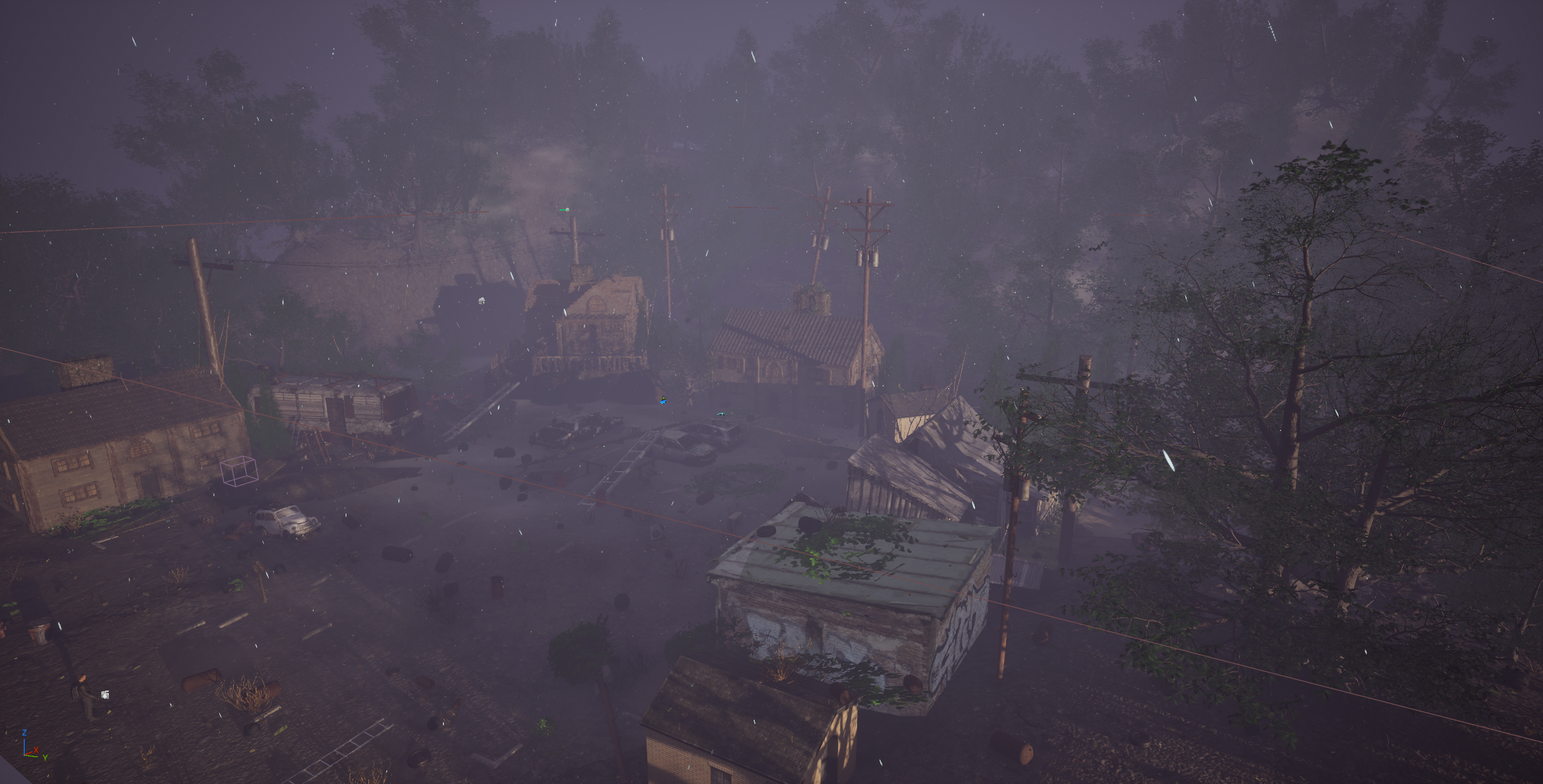
Developed in Unreal Engine, this project emphasizes modular environment construction, material consistency, and layered environmental storytelling. Building assets were sourced from marketplace libraries and re-authored through custom material work to unify surface response—introducing weathering, moisture variation, and tonal cohesion across the environment.
The terrain was built using a heightmap-based workflow and enhanced with a customized asphalt displacement material to achieve grounded surface breakup and believable damage. Environmental set dressing was executed using multiple foliage layers, separating debris, urban waste, and natural growth (grass, tumbleweeds, trees, and shrubs). This layered approach allowed for controlled distribution, improved scene readability, and efficient iteration.
A Niagara-based rain system was developed and art-directed to achieve a stylized, high-contrast look—pushing scale, density, and color toward an acidic, near-frosted visual quality. This system works in conjunction with environment materials that simulate water accumulation, enabling puddle formation directly within the landscape shader to reinforce environmental interaction.
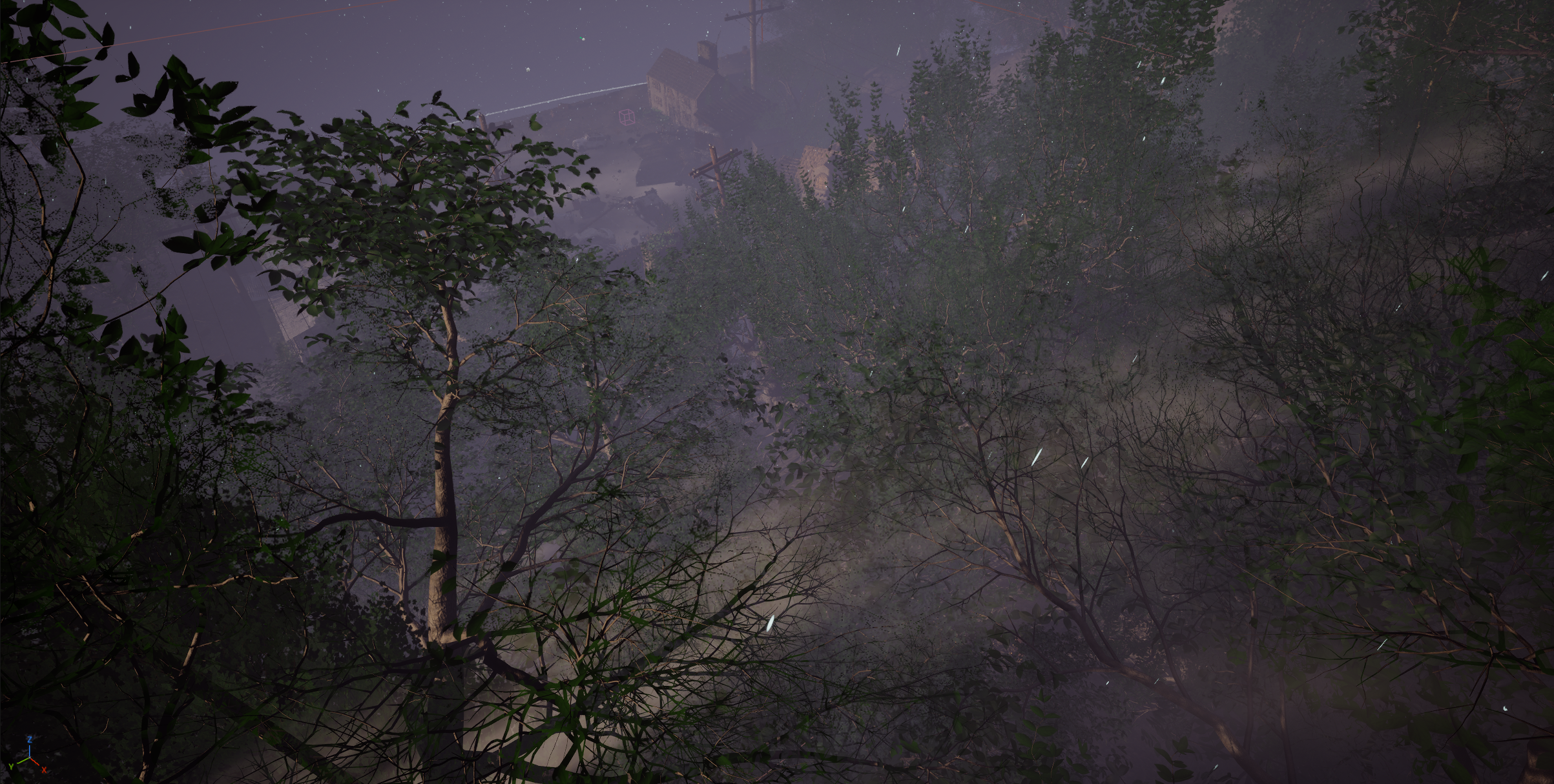
Atmosphere and depth were built through layered fog systems, including a custom lightweight scattered fog for mid-range depth and a denser volumetric pass to isolate background elements and forested areas. These systems were tuned to support composition, guide player focus, and maintain visual hierarchy.
To introduce narrative context and scale, a character animation was integrated, depicting a lone survivor navigating toward a structure. The scene is presented through a sequenced cinematic pass, designed to showcase composition, lighting transitions, and spatial storytelling across the environment.
This project highlights a production-aware approach to environment art, focusing on material-driven storytelling, real-time VFX integration (Niagara), procedural layering, and cinematic presentation, while maintaining performance-conscious decisions suitable for AAA pipelines.